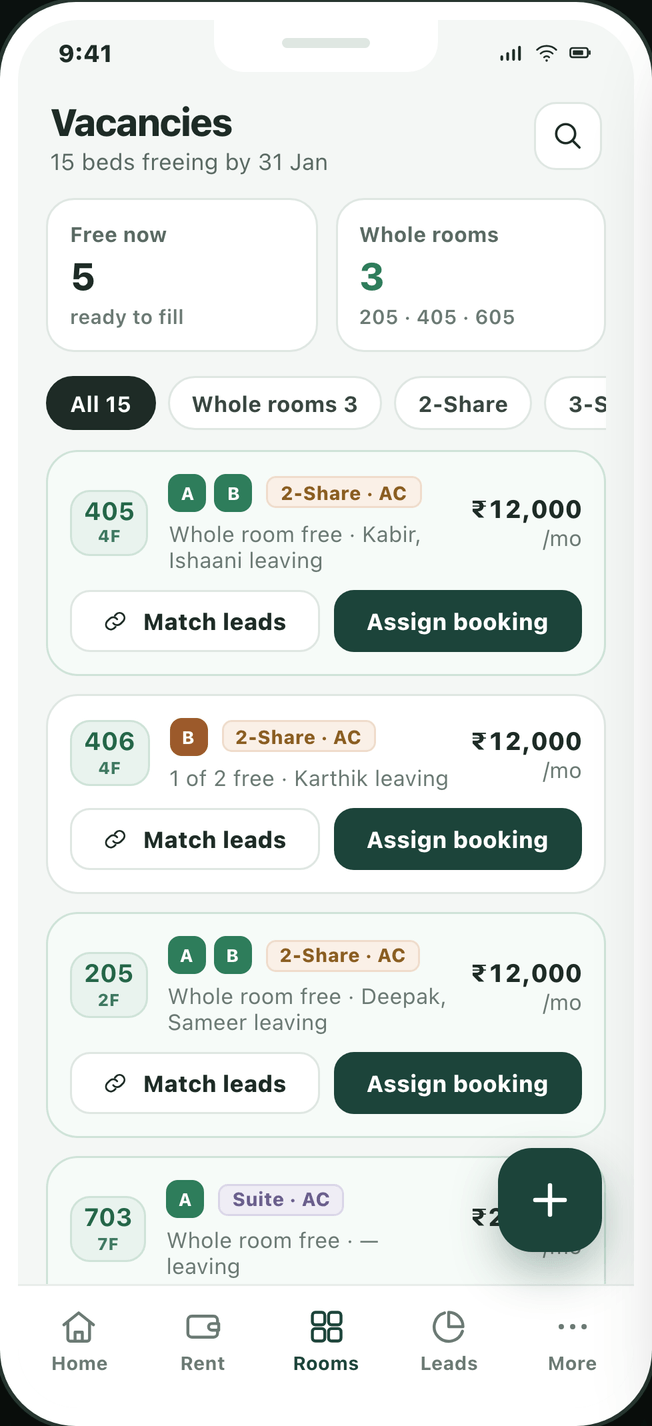
Notice logged the day it is given
When a resident gives notice, it is recorded with the date the bed frees. From that moment the bed shows in the vacancy view as “freeing on the 12th”, not as a surprise on the 12th. A month of rent is lost when a turnover happens with no lead lined up, and the only fix is to know about it early — which means writing it down when it is said, not when the room is already empty.
The vacancy view answers the three questions that actually matter: which beds are free now, which whole rooms are free, and which beds free by date. Each is a different sales conversation, so each is its own list.
A whole empty room is one room, not two loose beds
If a two-sharing room has both beds empty, renting them to two strangers is worse business than renting the room to a pair who want to share — and much worse than a small group who want the whole room. PGManage detects when every bed in a room is free and surfaces it as a whole room, so you can hold it and sell it as one.
This is the kind of judgement a spreadsheet cannot make, because a spreadsheet sees twelve empty beds, not “three of these are actually two whole rooms and one half-room.” The distinction is money: whole rooms command a different rent and attract a different, often better, resident.
The waiting lead sits next to the bed that fits
Leads do not convert because they are forgotten between the enquiry and the vacancy. PGManage scores waiting leads against the beds about to free, by room type and move-in date, so the person who wanted a two-sharing AC from the 15th is shown against the bed that opens on the 14th. You offer or assign from that screen — the match is the workflow, not a note to yourself.
The pipeline itself is a real funnel: contacted, visited, booked, with the source each lead came from. When conversion drops, the funnel shows where — leads that never get a site visit, or visits that never book — so you fix the leaking stage instead of guessing that you “need more leads.”
Bookings, and the advance that arrives without a bed
Daily stays and advance bookings live alongside the residents. The failure mode with advances is an amount that arrives before a bed is assigned, and then falls through a crack — so those sit in an unassigned queue that flags them until a bed is attached. When the day comes, a booking converts to a resident in one tap, carrying its details across without re-keying.
The result is that a bed’s whole life — booked, occupied, on notice, freeing, free — is one continuous record, and the gaps where rent leaks out are the gaps the software is built to close.